Sinopsis
The Naked Scientists flagship science show brings you a lighthearted look at the latest scientific breakthroughs, interviews with the world's top scientists, answers to your science questions and science experiments to try at home.
Episodios
-
![Aspirins Anniversary]()
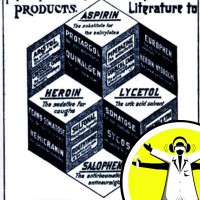
Aspirin's Anniversary
06/03/2011 Duración: 55minFrom anti-ague to anti-Alzheimer's agent: over the 112 years since it was first trademarked, Aspirin has evolved from popular painkiller to powerful preventative against heart attacks, strokes and even cancer. In this week's show we trace its history from the extraction of aspirin-like chemicals from willow bark to the creation of the drug itself. Plus, in the news, how the chemistry of life could have come to Earth in a meteorite and why we need to be careful with stem cells: a new study finds they have an above-average mutation rate. Also, a new technique to etch graphene sheets with... Like this podcast? Please help us by supporting the Naked Scientists
-
![Boosting Your Bones]()
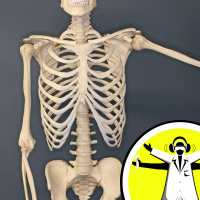
Boosting Your Bones
27/02/2011 Duración: 58minJust the bare bones this week as we find out how exercise strengthens the skeleton and how new scanning techniques can help to pick up osteoporosis earlier and inform its management. We also try out a new gadget for measuring the force muscles can apply and, in the news, discover what a self-healing tumour can tell us about common cancers, evidence that mammalian hearts can repair themselves and a new laser-based tool for diagnosing melanoma. Plus, how the bones of people who died up to a hundred years ago are helping scientists to combat chronic back pain by building a computer model of the... Like this podcast? Please help us by supporting the Naked Scientists
-
![Checking the Atmosphere and Changing the Climate]()
Checking the Atmosphere and Changing the Climate
20/02/2011 Duración: 57minWe look to the skies in this week's Naked Scientists show, to uncover ways to monitor and change the chemistry of the atmosphere. We join researchers on board an air-sampling aeroplane to discover how atmospheric chemistry changes once the sun sets, and we discuss options for engineering the climate if things get too hot. In the news, the Ecuadorian population that may hold the genetic key to a disease-free life, and the rocks that move themselves around in Death Valley. Plus, a targeted muscle re-innervation strategy to afford amputees more powerful prosthetic control. Like this podcast? Please help us by supporting the Naked Scientists
-
![What Makes Mucus Green?]()
What Makes Mucus Green?
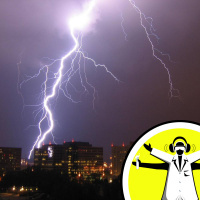
13/02/2011 Duración: 01h07minHow do magnets multiply? What keeps an aeroplane in the air? How do wild animals avoid incest? It's open season on science questions in this week's Naked Scientists. We'll find out if oil extraction leaves a cavity, can cranberry juice cut urine infection rates and what happens when two lightning bolts collide? In the news, evidence of bipedalism in an early human ancestor, how oily fish helps avoid common causes of blindness and how smartphones are taking the pain out of cardiac rehabilitation. Plus, in Kitchen Science, the unexpected physics of a flying balloon. Like this podcast? Please help us by supporting the Naked Scientists
-
![Low Energy, High-Power Processing]()
Low Energy, High-Power Processing
06/02/2011 Duración: 56minThis week we're getting inside the workings of the next generation of chips that are set to pack a bigger computing-punch but at a fraction of the energy-expenditure of todays' models: CTO Mike Muller joins us to explain the revolutionary technology that leading microprocessor-maker ARM is developing. Also, energy-efficient world-wide computing - we find out how distributing data-processing demands around the planet can turn waste energy into useful computations, simultaneously saving CO2 emissions, and in the news this week, a new malarial mosquito threat, rejection-free artificial blood... Like this podcast? Please help us by supporting the Naked Scientists
-
![Leprosy: The Low Down]()
Leprosy: The Low Down
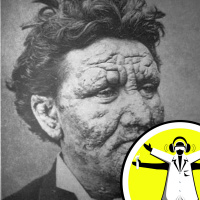
30/01/2011 Duración: 54minLeprosy goes under the microscope this week as we uncover the origins of one of the oldest known human diseases, recognised this week on World Leprosy Day. A quarter of a million new cases are diagnosed every year, but how is the illness spreading, what damage does it do to the body and can it be stopped? We also hear what archaeologists are unearthing about the history of leprosy and where it came from in the first place. Plus, why it's time to rethink the workings of the circadian clock, brain scans for bilingualism, cow-stomach bacterial genes for biofuels, and the engineering that lies... Like this podcast? Please help us by supporting the Naked Scientists
-
![Analysing Antimatter]()
Analysing Antimatter
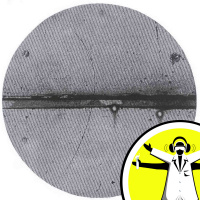
23/01/2011 Duración: 55minWe're analysing the matter of antimatter this week to find out what is antimatter, how is it made and why's it so rare in the Universe? We talk to researchers at CERN who are capturing anti-hydrogen so scientists can study it properly for the first time, and Dave and Meera call in to the hospital to hear how antimatter holds the key to better body scans. Diana discovers how gravity bends a beam of light and there's also news of a novel way to neutralise HIV, researchers uncover how brains gauge the passage of time, and agriculture on the microscale: scientists have found the world's smallest... Like this podcast? Please help us by supporting the Naked Scientists
-
![Do Metal Spinal Implants Lure Lightning?]()
Do Metal Spinal Implants Lure Lightning?
16/01/2011 Duración: 01h01minDoes a metal implant turn a person into a living lightning-conductor or radio receiver, is eye-size important, why is frost bad for freezers, where did the first organic molecules come from, what happens to sparkling drinks in space and why does a bump on the head make you see stars? This week, join Chris, Sarah and Dave as they pit their wits against the latest crop of your top questions. Plus, why making new computer chips looks set to become easy PC, how stem cells can get to the heart of Long QT Syndrome, feeding the world in 2050 and a new musical device to keep the drummer in the driving... Like this podcast? Please help us by supporting the Naked Scientists
-
![Would you donate your body to science?]()
Would you donate your body to science?
09/01/2011 Duración: 58minWe're discussing human dissection in this week's Naked Scientists. Chris visits the dissection room to find out how trainee doctors benefit from dissecting real bodies, and why many medical schools are increasingly turning to alternatives. We're joined by physician and film maker Paul Trotman, who followed the lives, and beyond, of three donors to explore the reasons why people choose to donate their bodies, and the impact the process had on the student's lives. In Naked Engineering, we find out how a design that copies the body's own structure and movements can make better artificial... Like this podcast? Please help us by supporting the Naked Scientists
-
![National Pathology Week 2010]()
National Pathology Week 2010
02/01/2011 Duración: 49minIn this special podcast we focus on the highlights of this year's National Pathology Week. We'll be going behind closed doors for a tour of the pathology labs at Great Ormond Street Hospital, and we'll explore the role of veterinary pathologists in diagnosing and treating animal disease. Like this podcast? Please help us by supporting the Naked Scientists
-
![Back in the Saddle: Getting Paralysed Patients Riding and Rowing]()
Back in the Saddle: Getting Paralysed Patients Riding and Rowing
26/12/2010 Duración: 17minIn this special episode of the Naked Scientists podcast, we explore the world of Functional Electrical Stimulation (FES), a technology allowing people paralysed from the waist down to row and cycle by using external electrodes to stimulate leg muscles. Michele Vanoncini investigates how it works, what benefits it can bring and talks to some of the people who have used the technique to go for gold... Like this podcast? Please help us by supporting the Naked Scientists
-
![Blowing out Candles Round Corners]()
Blowing out Candles Round Corners
19/12/2010 Duración: 57minIn this festive episode, can you get drunk through your feet, the chemistry of cocktails, twelve marine critters of Christmas, the best food and drink combos to eschew indigestion, does a carbon fibre bike go faster, why are snowflakes different shapes and a way to impress your peers at the office party by blowing out candles round corners... Like this podcast? Please help us by supporting the Naked Scientists
-
![Whys Graphene Great?]()
Why's Graphene Great?
12/12/2010 Duración: 59minGraphene is the focus of this week's Naked Scientists, including how it holds the key to the super-flexible touch screen displays of tomorrow, super-light composites and the next generation of computer chips. In the news, a breakthrough in understanding Alzheimer's Disease, why glider pilots should be paying more attention to how falcons fly and why a new exoplanet has led astronomers to question current theories of planetary formation. Plus, we celebrate the first chunk of cheese to make it into orbit and ask if there's any evidence of a health benefit from wearing magnetic bracelets... Like this podcast? Please help us by supporting the Naked Scientists
-
![Electrifying the Future]()
Electrifying the Future
05/12/2010 Duración: 01h01minCurrent breakthroughs in electricity generation and distribution go under the spotlight in this week's sizzling edition of the Naked Scientists. We talk to the team with the electrical equivalent of cold-storage that can put power "on ice" until it's needed, and we hear how bright sparks in the UK are leading the charge to roll out "energy kiosks" to empower rural communities in Africa. We also check out a new form of small-scale turbine to extract power from rivers whilst minimising the environmental impact. In the news, why young people are more likely to fall victim to the flu, how a dose... Like this podcast? Please help us by supporting the Naked Scientists
-
![Why do Mens Bits Shrink in the Cold?]()
Why do Men's Bits Shrink in the Cold?
28/11/2010 Duración: 01h20sHow heavy is the Earth? How do snakes digest huge meals? Should I fear falling bullets? We take on these questions and more in this Naked Scientists Question and Answer show! We'll discuss the ideal hair for head lice, the mechanics of using a straw and why men's bits shrink in the cold! In the news we explore the link between jetlag and forgetfulness, discover a moon with an oxygen atmosphere, and a new technique to tell someones age by their blood. Plus, in Kitchen Science we find out why a full carton is much harder to shake. Like this podcast? Please help us by supporting the Naked Scientists
-
![Smart Pills: Drugs to Boost Brain Power]()
Smart Pills: Drugs to Boost Brain Power
21/11/2010 Duración: 59minIQ-elevating agents that can boost brain power are being used by over 10% of university students. But how do these cognitive-equivalents of anabolic steroids for the brain actually work, what are their effects and are they safe? Moreover, is the advantage they confer an ethical one? And if not, should universities be screening students ahead of exams to deter their use? Meanwhile, in the news this week, we find out how lasers can cut complications in cataract surgery, why some people are allergic to wine, we hook up with the highlights from the world's biggest neuroscience meeting including... Like this podcast? Please help us by supporting the Naked Scientists
-
![The Science of Sustainable Shipping]()
The Science of Sustainable Shipping
14/11/2010 Duración: 56minWe set sail to discover the science of sustainable shipping in this week's Naked Scientists. We visit an enormous wave tank to find out how the sea swell can impact on damaged ships, and look at the problems caused by sulphur-rich shipping fuel. Plus, we hoist the SkySail, an enormous parafoil kite that can be deployed from the deck of a ship to cut fuel consumption by up to 60%. In the news we hear how happiness can be found here and now, why children tire so quickly when walking and how Earth became oxygenated 400,000 years earlier than we thought. Also, we investigate the elegant... Like this podcast? Please help us by supporting the Naked Scientists
-
![Cancer - Hallmarks and Hit and Run Viruses]()
Cancer - Hallmarks and Hit and Run Viruses
07/11/2010 Duración: 56minWe catch up with cancer research this week including evidence that cancers subvert stem cells to suppress the immune system and how covert "hit and run" viral infections may be triggering a lot more tumours than we first thought. Also, joining us from the National Cancer Research Institute conference in Liverpool, cancer biologist Bob Weinberg explains how he sees cancer becoming a controllable chronic condition within just ten years. Plus, the buzz around a new tumour-spotting ultrasound technique, how a burst of electricity to the brain boosts mathematical ability, a new trick to block the... Like this podcast? Please help us by supporting the Naked Scientists
-
![Where does Phlegm come from?]()
Where does Phlegm come from?
31/10/2010 Duración: 59minIt's National Pathology Week 2010 and to celebrate the launch we're joined by pathologist Dr Suzy Lishman to take on your science questions! We'll find out where phlegm comes from, how petroleum jelly helps healing and the weight of red blood cells synthesised in a human lifetime. Also, can you concentrate lasers with lenses, why does an open carport stop frost, and if carnivorous plants photosynthesise, why do they need to eat insects? Plus, how researchers in Scotland are sniffing out pollution with such sensitivity, they can detect forest fires all the way from Canada! In Kitchen Science,... Like this podcast? Please help us by supporting the Naked Scientists
-
![AIDS to conquering HIV]()
AIDS to conquering HIV
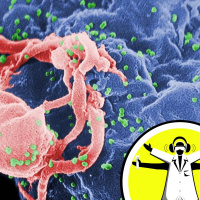
23/10/2010 Duración: 57minThe human immunodeficiency virus (HIV) goes under the microscope this week. We find out how the virus hijacks cells to construct new HIV particles and hear how close scientists are to developing a vaccine to block infection. In the news, we learn how bitter taste receptors in the lungs could lead to new asthma treatments, how our ancestors enjoyed some veg with their meat and how gene therapy could offer a way out of depression. Plus, how Lego is helping university students build a creative career in the world of engineering... Like this podcast? Please help us by supporting the Naked Scientists